Cold War Conversations
- Autor: Vários
- Narrador: Vários
- Editora: Podcast
- Duração: 470:49:43
- Mais informações
Informações:


Sinopse
In conversation with those that experienced the Cold War and those who are fascinated.
Episódios
-
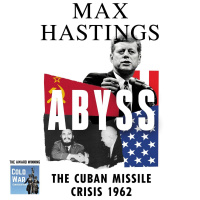
![The 1962 Cuban Missile Crisis with Sir Max Hastings (255)]()
The 1962 Cuban Missile Crisis with Sir Max Hastings (255)
30/09/2022 Duração: 01h01minThe 1962 Cuban Missile Crisis is reckoned to be one of the most perilous events in history, when the World faced a looming nuclear collision between the United States and Soviet Union. During those weeks, the world gazed into the abyss of potential annihilation. I speak with Sir Max Hastings whose new history Abyss: The Cuban Missile Crisis 1962 tells the story from the viewpoints of national leaders, Russian officers, Cuban peasants, American pilots and British disarmers. The period is brought to life with eye-witness interviews, archive documents and diaries, White House tape recordings, and top-down analysis. More than purely a focus on the 13 days of the crisis, the book provides context through the Cold War experiences of Fidel Castro’s Cuba, Nikita Khrushchev’s Russia, and Kennedy’s America. Among the areas we discuss are how Cuba became a crisis, the failure of intelligence on both sides, and those nail-biting Thirteen Days in which Armageddon beckoned. Buy the book and support the podcast https://a
-
![“Houston, we’ve had a problem” interview with Fred Haise, Apollo 13 astronaut (254)]()
“Houston, we’ve had a problem” interview with Fred Haise, Apollo 13 astronaut (254)
23/09/2022 Duração: 01h29minFred Haise was one of the three astronauts on the ill-fated Moon mission when a design fault caused an oxygen tank to explode mid-mission putting the Apollo 13 crew in mortal danger on April 13th, 1970. This was the seventh crewed mission in the Apollo space program and the third meant to land on the Moon. Now as you can imagine I’m genuinely excited to be speaking with one of the Apollo astronauts. Fred and I talk about his life and his almost accidental entry into flying. We cover his admission into the astronaut programme, the family impact, and as you can imagine go into some detail about his experiences on the Apollo 13 mission. Many of you will know of this mission via the Film “Apollo 13” starring Tom Hanks, and Fred shares his views on the film and corrects some of the inaccuracies. Buy Fred's new book Never Panic Early: An Apollo 13 Astronaut's Journey and support the podcast here https://amzn.to/3DvCRzN 0:00 Introduction 6:14 Fred Haise's journey to becoming an astronaut and role in Apollo 11 16:3
-
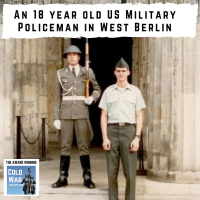
![An 18 year old US Military Policeman in Cold War West Berlin (253)]()
An 18 year old US Military Policeman in Cold War West Berlin (253)
16/09/2022 Duração: 01h15minRichard Blevins enlisted aged 18 in the US Army in March of 1987. He completed Basic Training & Military Police School training in July of 1987 and was posted to West Berlin as a United States Military Policeman. He describes his selection for Berlin duty while at Rhine-Main AFB in Frankfurt and his first journey across East Germany on the US Duty train to West Berlin. Richard’s first year consisted of patrol duties and combat training as well as serving at Checkpoints Bravo and Charlie as the assistant to the Non-commissioned Officer in Charge. He also got selected as a traffic accident investigator in 1988 where he would patrol with the West Berlin Police and respond to all car accidents involving US military, dependents, and civilian workers as well as West German nationals. Richard also describes how he heard the news on November 8th, 1989, that Erich Honecker had lifted all travel restrictions on East Germans starting at midnight. He is a close friend of Michael Rafferty who appeared in episode 13 w
-
![A trip across Central Europe on a East German MZ motorbike (252)]()
A trip across Central Europe on a East German MZ motorbike (252)
09/09/2022 Duração: 43minMZ was an East German motorcycle manufacturer located in Zschopau, Saxony. The acronym MZ stands for Motorenwerke Zschopau GmbH (German for Zschopau engine factory). In the 1980s MZ was regarded by the British motorcycle press as producing ugly and old-fashioned (if worthy) motorcycles however, there was a hard-core set of UK fans who loved this relatively, cheap and easy-to-repair bike. Julian Howe was a big fan of the MZ bike. He tells of a bizarre honeymoon of fellow MZ club members which involved MZ bike fans from across the UK touring Western Europe and the Warsaw Pact Countries. From sharing drinks with border guards to being on the receiving end of CS gas in Krakow it’s a tour through late 1980s Europe on the back of a two-stroke MZ motorbike. 0:00 Introduction and background on MZ motorcycles 1:21 Call for donations and testimonial from a supporter 5:28 The journey begins - crossing the border into East Germany 11:26 Interaction with an East German border guard and reflections on environment 15:
-
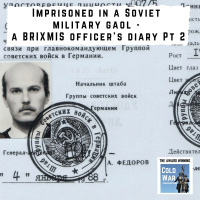
![Imprisoned in a Soviet Military gaol - a BRIXMIS officers diary Pt 2 (251)]()
Imprisoned in a Soviet Military gaol - a BRIXMIS officer's diary Pt 2 (251)
02/09/2022 Duração: 01h01minThis is the 2nd part of my interview with Lt Col. Stephen Harrison, MBE who served for two years as a full-time Touring Officer with BRIXMIS. The tours were hazardous three-man, vehicle-borne patrols collecting intelligence on the Warsaw Pact forces in East Germany for up to five days and nights over a series of four-month patrolling periods. In this episode, we hear of Stephen’s imprisonment in a Soviet Army gaol, following detention in a Soviet Army garrison town as well as East German and Soviet Army press coverage about his activities. Stephen’s speciality was using his language skills to engage and befriend opposition troops and thereby gaining valuable intelligence. He used to go into bars frequented by Soviet officers and recalls one particular drunken night in Potsdam.. We also hear about his visit to the infamous World War 2 prison camp of Colditz castle where he befriends the staff enabling other BRIXMIS tours to visit regularly. Stephen also shares details of the top-secret Operation Tomahawk, a
-
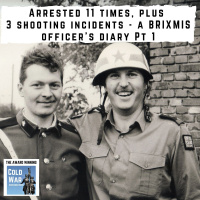
![Arrested 11 times, plus 3 shooting incidents - a BRIXMIS officers diary Pt 1 (250)]()
Arrested 11 times, plus 3 shooting incidents - a BRIXMIS officer's diary Pt 1 (250)
26/08/2022 Duração: 52minLt Col. Stephen Harrison, MBE served for two years as a full-time Touring Officer with BRIXMIS. These Tours were hazardous three man, vehicle-borne patrols collecting intelligence on the Warsaw Pact forces in East Germany for up to five days and nights over a series of four-month patrolling periods. They lived in the field and did not carry weapons while Soviet and East German troops were nearly always armed, and their ever-present sentries carried live ammunition. The Tours operated in the closest proximity to these hostile and aggressive Warsaw Pact troops whose orders permitted them to use whatever force necessary, including opening fire, to protect the property they are guarding. We hear in detail about Stephen’s experiences in these demanding and frequently dangerous situations, as well as how he used his language skills to engage and befriend opposition troops gaining valuable intelligence which made him a particular threat to the Soviets. Don’t miss part 2 here https://coldwarconversations.com/episode
-
![Life in the forbidden zone at the East/West German border (249)]()
Life in the forbidden zone at the East/West German border (249)
19/08/2022 Duração: 51minA young Claudia Bierschenk lived at the edge of a world called the GDR, in a village surrounded by hills, valleys and thick forests. Her great uncle lives in the Forbidden Zone, the area where the East German border is a few metres away from West Germany. This is where the villages are like ghosts towns and inhabitants need special permits to enter. Claudia provides a vivid and unique description of entering the Forbidden Zone for the first time after being granted special permits to visit her Great Uncle on his 80th birthday. His house is the last house before the final border fences and Claudia describes up close to the fences, while her grandfather tells her about “rabbit discos”… We also hear more of her life in this isolated area, including strange sports activities and Claudia’s experience of being trained as a 12-year-old Para medic. We end the episode talking about how she and her family experienced the momentous events of 1989 when the border opens, and East Germans are free to cross into West Germa
-
![The girl at the edge of the World - an East German childhood at the West German Border (248)]()
The girl at the edge of the World - an East German childhood at the West German Border (248)
12/08/2022 Duração: 56minA young Claudia Bierschenk lived in a village surrounded by hills, valleys and thick forests at the edge of a world called the GDR. It could be beautiful, but the Iron Curtain runs through it, like a tectonic plate separating East and West and Claudia from her West German relatives. She tells of her life in this isolated area, of village life, far away from the socialist showpiece of East Berlin, where there are only two types of yoghurt in the village store. In a series of snapshots, we re-live her childhood of secretly watching West German TV, learning “Marxism-Leninism for kids” at school, and the rare joy of a phone call from the West. We also hear of her parents’ challenges. For her father, it’s his home village, but he is criticised for his liberal views and for wearing Western braces to school. Locals see her mother as an outsider, and she yearns for a life in the West with her sister in West Berlin. Claudia has distilled these stories into a book, Never Mind, Comrade, published by Tangerine Press.
-
![A daughters 18 year search for her Cold War CIA pilot father at the Bay of Pigs invasion in Cuba (247)]()
A daughter's 18 year search for her Cold War CIA pilot father at the Bay of Pigs invasion in Cuba (247)
05/08/2022 Duração: 01h41sIn 1961, members of the Alabama Air National Guard secretly took part in the failed invasion of Cuba by U.S.-backed Cuban exiles known as the Bay of Pigs. This was a covert attempt by the United States to overthrow the Soviet-allied Cuban government of Fidel Castro. Pete Ray was one of eight Alabama guardsmen who flew combat missions on April 19th 1961, which resulted in the deaths of Pete and three members of the Alabama unit. U.S. President John F. Kennedy later acknowledged America's involvement but denied that American military personnel had entered Cuban territory. It was not until 1987 did the U.S. revealed that eight ANG members had indeed flown into Cuban airspace. We hear from Pete Ray’s daughter Janet, who tirelessly worked to find out the truth of what happened that day despite the best efforts of the CIA, the Cubans, and the US government to obstruct her investigations. Cold War history is disappearing; however, a simple monthly donation will keep this podcast on the air. You’ll get a sought-
-
![British Army Air Corps helicopter co-pilot in Cold War Germany (246)]()
British Army Air Corps helicopter co-pilot in Cold War Germany (246)
29/07/2022 Duração: 01h26minPaul continues his story with his recruitment into the Army Air Corps. It’s initially delayed with a tour providing airfield repair in West Germany and then the Falklands, but finally, he’s at training at Middle Wallop, the home of the Army Air Corps. He describes the training including underwater escapes, flying and navigation. As a Gazelle crewman, his role was navigator, observer and co-pilot. We hear of exercises including the lesser-known Railex/Probex, a US, French and British exercise to re-open a land corridor to West Berlin should the links be closed by Warsaw Pact forces and the British Frontier Service. Paul’s story is again full of great anecdotes and the dangerous reality of flying low-level missions in a single-engine aircraft including a forced landing with a General on board. 0:00 Introduction and Paul's recruitment into the army air corps 1:30 Sponsor: Call for donations and listener testimonial 8:08 Discussion on practice drills and Paul's deployment to the Falklands 20:02 Surviving trainin
-
![A boy soldier in the Cold War Royal Engineers (245)]()
A boy soldier in the Cold War Royal Engineers (245)
22/07/2022 Duração: 57minPaul joined the Royal Engineers in 1977, aged 16 as an apprentice. We hear of his experience of joining the army at such a young age and being away from home for the first time. After initial training his first posting was to Osnabruck in 1979. Shortly after his arrival Paul is appointed to the challenging role of driver to the Squadron Sergeant Major With participation in exercises such as Crusader 80 and Active Edge Paul describes in detail the role of Royal Engineers in Cold War Germany, including mine laying, bridge demolition and fixed defence construction. Paul’s story is full of great anecdotes and tales of the reality of life in the British Army of the Rhine. Don’t miss our next episode where Paul joins the Army Air Corps and becomes an Aircrewman Observer on Gazelle helicopters along the Inner German Border. 0:00 Introduction to Paul's journey in the Royal Engineers 1:30 Request for support to keep the podcast running 2:31 Paul's early life and decision to join the army 9:14 Paul's arrival in Osnabr
-
![A Mormon missionary in Cold War East Germany (244)]()
A Mormon missionary in Cold War East Germany (244)
14/07/2022 Duração: 01h24minIn the early 1980s East Germany had just 5000 members of the Church of Latter-day Saints, many of which had been members since before World War 2. In 1982 East German leader Erich Honecker historically allowed the church to build a temple in Freiberg and in 1988 Mormon missionaries were allowed into East Germany. Ken Brady describes his experiences as a Mormon missionary in East Germany as the country gradually disappeared and was absorbed into West Germany. Ken also gives us a valuable view of life away from Berlin in cities such as Cottbus, Gorlitz, Schwerin, Frankfurt an der Oder and Eisenhüttenstadt. It’s a fascinating story told with humour and candour as Ken grapples with local dialects, the local food and tricks with East German currency. 0:00 Introduction and Ken Brady's early interest in East Germany 7:16 The Church's operations in East Germany before the fall of the Berlin Wall 12:24 First impressions of East Germany 21:17 Fear of the Stasi after the fall of the Berlin Wall 28:18 Encounters with
-
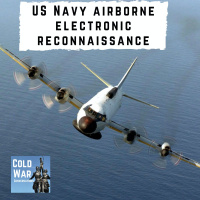
![US Navy Cold War airborne electronic reconnaissance (243)]()
US Navy Cold War airborne electronic reconnaissance (243)
08/07/2022 Duração: 01h17minKC flew the US Navy’s airborne Electronic Reconnaissance during the 1980s in the Lockheed EP-3 which is an electronic signals reconnaissance version of the P-3 Orion. He flew as a Navigator, Senior Electronic Warfare Evaluator and Mission Commander. We hear about several missions he was involved in including his first detachment to Athens the then main USN operating base for missions in the Mediterranean and the Adriatic. We also hear about flying in the Baltic from bases in the UK (Mildenhall/Wyton) or FRG (Schleswig-Jagel). Flying from Keflavik in Iceland KC monitored a huge Soviet Navy exercise in the Norwegian Sea involving the Kiev, Kirov, and numerous cruisers, destroyers, and frigates. In the 1980s Libya was claiming the Gulf of Sidra as its territorial waters and KC flew in support of “freedom of navigation” operations involving USN ships. It’s a great insight into a relatively unknown part of Cold War air operations. 0:00 Introduction and KC's experience on the EP3 9:21 Focus on the Adriatic and Yugo
-
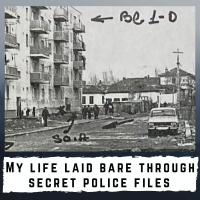
![My life laid bare through secret police files (242)]()
My life laid bare through secret police files (242)
01/07/2022 Duração: 01h18minWhat is it like to be under secret police surveillance? On 10 March 1983, 12-year-old Carmen Bugan returned from school to find Romanian secret police in her living room. Her father’s protest against the regime had changed her life forever. In recent years Carmen gained access to the files of the Romanian secret police. She herself is surprised by the intimacy of the surveillance. Forgotten conversations, love letters, and arguments are all laid bare via the detailed notes taken by the Securitate. We hear the sadness of discovering friends and family members were involved in informing on them too. Carmen and I discuss the “language of oppression”, the subtle and not-so-subtle methods used to try and ensure a compliant population but still thwarted by humanity even in the darkest recesses of the Romanian prison system. It’s a warning from history and the meaning of freedom in current times. 0:00 Introduction of guest Carmen Bugan and her experience with the Romanian secret police 4:08 Carmen's first experi
-
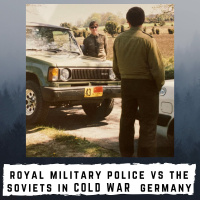
![Royal Military Police versus the Soviets (SOXMIS) in Cold War West Germany (241)]()
Royal Military Police versus the Soviets (SOXMIS) in Cold War West Germany (241)
24/06/2022 Duração: 01h22minKeith Bailey Joined British Army at 16 in 1973. He was recruited into the Blues and Royals, (Household Cavalry) and served in West Germany as a gunner in Chieftain tanks. However, he was keen to serve in the Royal Military Police and particularly 19 (Support) Platoon known as "The White Mice". Their role was to track the SOXMIS (Soviet Military Mission) in West Germany. SOXMIS operated under a 1946 agreement where the Soviets, British, US and French agreed to exchange mission groups to patrol the opposing side’s then zones of occupation. The agreement continued to 1990 and needless to say both sides bent the rules somewhat… 0:00 Introduction 2:35 Keith Bailey's Military Career and Transition to the Royal Military Police 16:39 The Role of the RMP during the Cold War and Bailey's Experience 19:11 Joining the 19 Support Platoon and Training 23:29 The Presence of Soviet Troops in West Germany and Interactions 38:07 Soviet Intelligence Gathering and Anecdotes 43:28 Discussion about Soviet Precautions and Proto
-
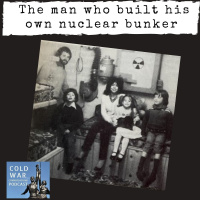
![The man who built his own nuclear bunker (240)]()
The man who built his own nuclear bunker (240)
17/06/2022 Duração: 51minGraham Bate was 30-year-old Civil Servant when he built his own nuclear bunker in the garden of his rural home 20 miles outside Hull in the UK. It was here that the Bate family expected to survive for at least 3 weeks after a nuclear attack. We speak with Graham Bate and his son Conrad who was 5 years old when the bunker was built and has vivid memories of the period. 0:00 Introduction and background 0:53 Guest Introduction: Graham Bate and his nuclear bunker 2:26 The inception and design of Graham's bunker 7:04 Family's experience and trial run in the bunker 13:27 Reflections on the bunker project 20:10 The family's nuclear emergency plan 29:11 Security measures and local perspectives on the bunker 32:37 Living conditions in the bunker 37:03 Graham's fame and bunker building business 43:39 Impact of the Cold War on the bunker business 46:03 Learning curve and survival in a post-apocalyptic scenario Table of contents powered by PodcastAI✨ Cold War history is disappearing; however, a simple monthly donation wi
-
![Cold War number stations (239)]()
Cold War number stations (239)
10/06/2022 Duração: 01h19minYou might remember listening to short wave radio during the Cold War and coming across weird transmissions of metallic voices reciting random groups of numbers through the ether. These are number stations, shortwave radio stations characterised by broadcasts of formatted numbers, which were being sent to spies operating in foreign countries. Number stations were used widely during the Cold War and we speak with Jo Reggelt. Jo has been working with Simon Mason who was a founding member of ENIGMA, launched in the 80s after identifying several of these stations. We discuss in detail the operations behind the transmissions and the stations themselves. You will hear some sample transmissions which Jo has kindly allowed us to use, including one with drunken Stasi officers serenading their agents after the opening of the Berlin Wall. We also detail a UK spy case that centred on capturing an agent red-handed listening to a numbers station. There’s further information including links here. https://coldwarconversations
-
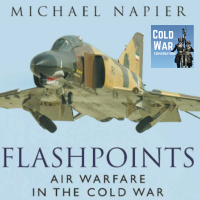
![Air warfare in the Cold War (238)]()
Air warfare in the Cold War (238)
03/06/2022 Duração: 54minThe Cold War years were a period of unprecedented peace in Europe, yet they also saw a number of localised but nonetheless very intense wars throughout the wider world in which air power played a vital role. I speak with former Cold War Tornado pilot and acclaimed aviation historian Michael Napier who has written Flashpoints: Air Warfare in the Cold War published by Osprey which describes eight of these Cold War conflicts. We discuss the wide range of aircraft types used and the development of tactics over a period of revolution in aviation technology and design which saw some of the most modern technology that the NATO and Warsaw Pact forces deployed. UK listeners buy the book here US listeners buy the book here 0:00 Introduction 2:08 Introduction of guest Michael Napier and discussion on the importance of personalizing conflicts 7:18 Deep dive into the Suez and Congo conflicts 14:54 Role of the UN's air force in conflicts and the impact of combat aircraft 24:08 Introduction to the Indo-Pakistan wars and
-
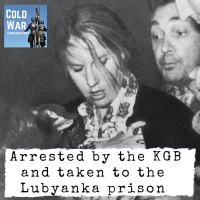
![Arrested by the KGB and taken to the Lubyanka prison (237)]()
Arrested by the KGB and taken to the Lubyanka prison (237)
27/05/2022 Duração: 01h07minMarti Peterson was the first female CIA operative to be assigned to Moscow, probably the most challenging posting during the Cold War. Don't miss the previous episode here https://coldwarconversations.com/episode236/ This second episode turns to TRIGON, the code name for Alexandr Ogorodnik. He was an official in the Soviet Embassy in Bogota, Columbia recruited by the CIA in 1973. Marti and TRIGON never met in person, but they shared information through dead drops and intelligence. We hear about the tradecraft involved. Marti is arrested by KGB agents and taken to Moscow's Lubyanka Prison for questioning and talks in detail about that experience. UK listeners buy Marti's the book here and support the podcast US listeners buy Marti's the book here and support the podcast 0:00 Introduction and Marti Peterson's role in the Cold War 2:33 Recruitment of Trigon by the CIA 10:06 Marti's first dead drop for Trigon and surveillance evasion techniques 18:24 Marti Peterson's account of her adrenaline-filled Cold War o
-
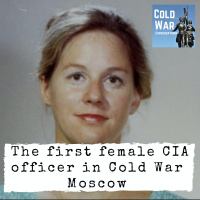
![The first female CIA officer in Cold War Moscow (236)]()
The first female CIA officer in Cold War Moscow (236)
20/05/2022 Duração: 58minMarti Peterson was the first female CIA operative to be assigned to Moscow, probably the most challenging posting during the Cold War. Her story begins in Laos during the Vietnam War where she accompanied her husband John, a CIA officer. She describes their life in a small city in Laos, and the devastating news she received on October 19, 1972. Marti returned to the United States and one night at dinner a good friend suggested she look into working for the CIA. After making it clear to CIA recruiters that she didn’t want to be a secretary or an admin assistant they trained her to become an operative, effectively a spy. When Marti was posted to Moscow during the day, she worked as a diplomat at the U.S. Embassy. At night, on weekends and during her lunch breaks, she would report to the CIA station in the same building to do her work as an operative. UK listeners buy Marti's the book here and support the podcast US listeners buy Marti's the book here and support the podcast 0:00 Introduction and Marti Peters