The Zen Studies Podcast
- Autor: Vários
- Narrador: Vários
- Editora: Podcast
- Duração: 170:35:32
- Mais informações
Informações:


Sinopse
Host Domyo Burk is a Soto Zen priest and teacher. She records episodes specifically for podcast listeners on traditional Zen and Buddhist teachings, practices, and history.
Episódios
-
![154 - Avatamsaka Sutra - Each One of Us Has Unique Bodhisattva Gifts to Offer – Part 1]()
154 - Avatamsaka Sutra - Each One of Us Has Unique Bodhisattva Gifts to Offer – Part 1
01/12/2020 Duração: 39minPart of our bodhisattva path is embracing our uniqueness and finding our own particular, special bodhisattva capacity, talents, and calling. Each of us has our own unique gifts to offer the world which will determine what kind of service we should devote ourselves to, it just takes some imagination to discover them. A teaching from Avatamsaka Sutra can help stimulate our imaginations in this regard.
-
![153 - Kshanti, The Perfection of Endurance: Lifes Not Always a Bed of Roses]()
153 - Kshanti, The Perfection of Endurance: Life's Not Always a Bed of Roses
18/11/2020 Duração: 24minKshanti is the Buddhist perfection (paramita) of endurance. Practice can relieve suffering, but it takes work; it isn’t a magic pill that brings instant peace and bliss. An essential part of our practice is learning how to endure - but not in a passive way, but in a determined refusal to be beaten down, defeated, deflated, or stopped in our efforts to relieve suffering for self and other and bring about a better world.
-
![152 - Lotus Sutra 3: This Means YOU - The Parable of the Lost Son]()
152 - Lotus Sutra 3: This Means YOU - The Parable of the Lost Son
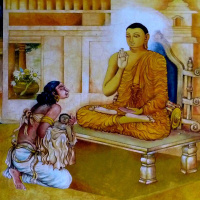
11/11/2020 Duração: 22minThe Lotus Sutra parable of the Lost Son perfectly conveys the difference between hinayana and Mahayana practice. Despite what we may think of ourselves, we already have everything we need - including the capacity for great liberation and service. At the same time, we need to practice in order to grow into our inheritance.
-
![151 - The Emptiness of Self and Why It Matters]()
151 - The Emptiness of Self and Why It Matters
26/10/2020 Duração: 31minThe emptiness of self is a Zen teaching that may seem rather abstract and philosophical, or even kind of nihilistic, depressing, or disorienting. Why does this matter? In brief, knowing the true nature of our self is what liberates us from fear and suffering.
-
![150 - Zazen as the Dharma Gate of Joyful Ease]()
150 - Zazen as the Dharma Gate of Joyful Ease
17/10/2020 Duração: 30minIn this episode I focus on how zazen is the dharma gate of joyful ease, because experiencing it as such is so profoundly restorative at a time when our lives tend to be stressful in many ways. I also think it’s necessary to explore the way in which zazen is the dharma gate of joyful ease because that dharma gate is subtle and can be elusive because to enter it we have to let go of all of our normal ways of operating.
-
![149 - Understanding Peoples Actions Through the Six Realms Teaching]()
149 - Understanding People's Actions Through the Six Realms Teaching
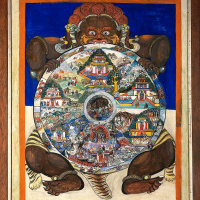
08/10/2020 Duração: 42minUnderstanding people's actions can be difficult. Sometimes we can't help but feel disbelief, judgment, or disgust toward people based on how they respond to the suffering of others. The Buddhist teaching about the Six Realms of existence can help us understand people's mind states and motivations, hopefully leading us to greater patience, less judgment, and – most importantly – insight into what might work best to get through to people and help them change.
-
![148 – Three Ingredients for a Generous Life in a Crazy World]()
148 – Three Ingredients for a Generous Life in a Crazy World
30/09/2020 Duração: 32minBearing Witness, Taking Care, and Taking Action: A skillful balance of these ingredients helps you sustain energy, motivation, positivity, and equanimity even when so many things are falling apart, corrupt, unjust, discouraging, even frightening. It helps you maintain compassion and take responsibility as a citizen of the world without being overwhelmed and disheartened by the scale of the suffering, and helps you take joy in your precious life without denying or ignoring suffering and injustice.
-
![147 - Loving-Kindness (Metta) Practice as an Antidote to Fear and Anxiety]()
147 - Loving-Kindness (Metta) Practice as an Antidote to Fear and Anxiety
19/09/2020 Duração: 32minWhen we call suffering beings to mind and extend metta - or loving-kindness - it might seem like we'd be opening up to more suffering and thereby increase our own fear and anxiety, but this is not the case. In fact, metta helps us face reality while aligned with our deeper nature. This alignment results in a sense of sufficiency and strength as we perform an act of generosity, give up our self-centered concerns, and become anchored in our boundless self.
-
![146 - Respect Even for Terrible People: What Does It Mean?]()
146 - Respect Even for Terrible People: What Does It Mean?
12/09/2020 Duração: 28minBuddhism, like other religions, teaches we should treat each and every human being with respect, regardless of their behavior or off-putting manifestation. What does this really mean? Sometimes people are hateful, manipulative, cruel, selfish, irresponsible, or downright violent and destructive. Surely, in being asked to respect such people, we’re not being asked to ignore or condone their behavior, so how does respect for them actually look? And why is it important to cultivate this unconditional respect?
-
![145 - No Matter What Happens to You, You Have Choice in the Matter]()
145 - No Matter What Happens to You, You Have Choice in the Matter
26/08/2020 Duração: 31minBuddhism teaches that no matter what happens to us, we always have some degree of choice about how we respond, and what we do next. At those critical, precious moments when your perspective widens and you become more aware of yourself, you can act in accordance with your aspiration to relieve suffering for self and other. This is what practice is: Taking advantage of our moments of choice, which arise countless times throughout the day and night, never losing faith that each of those little choices matter.
-
![144 - Lotus Sutra 2: Wake Up! The Parable of the Burning House]()
144 - Lotus Sutra 2: Wake Up! The Parable of the Burning House
13/08/2020 Duração: 34minThe Parable of the Burning House is one of five main parables of the Lotus Sutra, a classic Mahayana Buddhist text. I go through the parable paragraph by paragraph, stopping to reflect on each part of the story along the way and encouraging you to imagine yourself within the story as if it were a dream. I finish up by discussing the relevance of this teaching for our everyday lives and practice.
-
![143 - The Experience of Enlightenment and Why It’s for All of Us]()
143 - The Experience of Enlightenment and Why It’s for All of Us
03/08/2020 Duração: 34minWhether you are personally intrigued by the concept of enlightenment or not, it is absolutely central to Buddhism. However, enlightenment – to use a kind of corny phrase – is not what you think. I discuss sudden and gradual experiences of enlightenment, the changes such experiences bring about in us, and why it’s important for all of us to seek enlightenment.
-
![142 - Direct Experience Is Liberation: When There Are No Stories, There Is No You]()
142 - Direct Experience Is Liberation: When There Are No Stories, There Is No "You"
24/07/2020 Duração: 31minHumans evolved to make sense of their experience by explaining with a story, or narrative. Although our stories help us communicate and navigate our lives, they also can preoccupy and burden us. Sometimes they are distressing, depressing, or exhausting to maintain. This is why the Buddha said to train ourselves such that “in the sensed, there is only the sensed, in the cognized, only the cognized.” That is, we should train ourselves to experience things without our stories.
-
![141 - The Practice of Vow 2: Choosing the Direction We Want Our Lives to Take]()
141 - The Practice of Vow 2: Choosing the Direction We Want Our Lives to Take
15/07/2020 Duração: 28minThe practice of vow is central in Buddhism, as I’ve discussed before. Vows – alternatively aspirations, intentions, or commitments, formal or informal – are a conscious choice we make about the kind of life we want to live, and the kind of person we want to be. Clarifying the vows we are already living, and the vows we still want to take on, can help give direction and meaning to our lives.
-
![140 – Sustainable Buddhist Practice: Creating Form But Keeping It Flexible]()
140 – Sustainable Buddhist Practice: Creating Form But Keeping It Flexible
04/07/2020 Duração: 39minHow do we create a strong and sustainable Buddhist practice outside of a monastery? We create structure for ourselves and build good habits, but then the circumstances of our lives change. There are many competing demands on our attention and time. We have to mostly rely on our own self-discipline instead of social support. The key is giving our practice form but also accepting that it will constantly change, like learning to shape clay on a potter’s wheel.
-
![139 - Suchness: Awakening to the Preciousness of Things-As-It-Is]()
139 - Suchness: Awakening to the Preciousness of Things-As-It-Is
23/06/2020 Duração: 45minAll religions and spiritual practices have one purpose: To relieve our suffering and give us hope. As Buddhists we sometimes emphasize “relieving suffering” and leave it unsaid that, after being freed from your suffering, you will perceive things in a way that gives you hope, inspiration, and solace. The Buddhist teaching of suchness arose a couple hundred years after the Buddha to address the need some of us feel to hear descriptions of the positive aspect of reality from the beginning of our practice.
-
![138 - Buddhist Images of Fierceness and Compassionate Anger]()
138 - Buddhist Images of Fierceness and Compassionate Anger
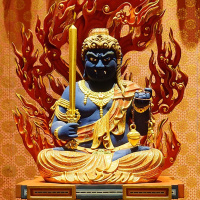
12/06/2020 Duração: 36minDespite the placid appearance of most Buddha statues and the Buddhist precept against indulging anger, there is a place for fierceness and compassionate anger in Buddhism. Especially when we're faced with injustice or need to protect others, we may need the energy of anger or fierceness to make ourselves heard. I discuss how respect for appropriate fierceness and anger appears in Buddhist iconography and mythology.
-
![137 - Sustainable Bodhisattva Practice when the World is (Literally) on Fire]()
137 - Sustainable Bodhisattva Practice when the World is (Literally) on Fire
01/06/2020 Duração: 44minMany American cities are on fire - literally - as tensions over systemic racism erupt. How do we enact our bodhisattva vows in the face of all of this suffering - caused by racism, the global pandemic, the breakdown of earth's natural life support systems, and global heating? Our vow is to "save all beings" but - at least in terms of an individual's goal - that is impossible. How do we honor our bodhisattva vow in a vital and authentic way, as opposed to it being a largely irrelevant ideal?
-
![136 - Grief in Buddhism 2: Some Buddhist Practices Helpful for Facing and Integrating Grief]()
136 - Grief in Buddhism 2: Some Buddhist Practices Helpful for Facing and Integrating Grief
21/05/2020 Duração: 29minGrief is love in the face of loss; do you want to stop loving in order to stop feeling grief? Of course not. But we also don't want to be controlled or overwhelmed by it. There are a number of Buddhist practices that can help us as we practice with grief – trying to face it, and making sure we don’t impede our own grief process. What I’ll share in this episode isn’t by any means a developed or exhaustive process of grief work, it’s just a short list of Buddhist practices that can be beneficial.
-
![Mini Episode - A Four S Approach to Shikantaza: Sit Upright, Still, Silent, Simply Be]()
Mini Episode - A Four "S" Approach to Shikantaza: Sit Upright, Still, Silent, Simply Be
16/05/2020 Duração: 10minShikantaza, or the practice of "just sitting," can be challenging. We're asked not to try to control our meditative experience, but are we just supposed to sit there like a sack of potatoes and let habit energy have its way? I present a simple approach to returning to your intention whenever you have a moment of awareness in your sitting, and making that intention very simple and free from expectation of results. We simply intend four "S's": To sit upright, still, silent, and simply be.