Sticky Notes: The Classical Music Podcast
- Autor: Vários
- Narrador: Vários
- Editora: Podcast
- Duração: 250:41:18
- Mais informações
Informações:


Sinopse
Sticky Notes is a classical music podcast for everyone. Whether you are a beginner just looking to get into classical music but don't know where to start, or a seasoned musician interested in the lives and ideas of your fellow artists, this podcast is for you. The show will feature interviews with the top artists of today, in-depth looks at specific pieces from the repertoire, and deep dives into each era of classical music, plus much more.
Episódios
-
![Weill: The Seven Deadly Sins]()
Weill: The Seven Deadly Sins
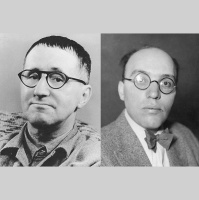
26/06/2025 Duração: 01h01sThe collaboration between Kurt Weill and Bertolt Brecht is rightly legendary. The two men could not have been more different from each other, and like the Brahms/Joachim relationship I mentioned in my recent show about the Brahms Double concerto, the friendship between Weill and Brecht was stormy to say the least. The two collaborated on some of the most memorable works of the Weimar era in Germany, such as the Threepenny Opera, which features a pretty famous tune called Mack the Knife. Their final collaboration was on the “sung ballet” The Seven Deadly Sins. This is a piece that was written at a point of remarkably high tension within Weimar Germany. On an artistic level, the 1920s and early 1930s had seen a veritable explosion in the world of culture, with art, dance, theater, and music all featuring artists who were pushing the boundaries with wild experimentation and a kind of ecstatic fervor that produced some of the world’s greatest and most memorable cultural achievements. On a parallel track however,
-
![The Ravel Sound with Norbert Müllemann and Stefan Knüpfer]()
The Ravel Sound with Norbert Müllemann and Stefan Knüpfer
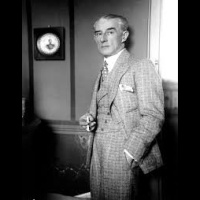
12/06/2025 Duração: 45minI so enjoyed making this latest episode in my collaboration with G Henle Publishers. I talked with two absolute experts in their fields, Norbert Mülleman and Stefan Knüpfer, all about how to edit Ravel's music, and how to create the Ravel sound on the piano. This episode definitely veers into some very nerdy territory, but Norbert and Stefan are both so brilliant at explaining very high level concepts in a way that anyone can understand, from a person who has never looked at a score to a professional performer. I think everyone will learn a lot from this episode and I don't think you'll ever hear Ravel the same way again after listening! Enjoy!
-
![Dvorak Violin Concerto]()
Dvorak Violin Concerto
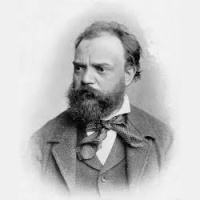
29/05/2025 Duração: 49minAdmit it: if you're a fan of classical music—or even just a regular concertgoer—you might have glanced at the title of this episode and done a double take. The Dvořák Violin Concerto? Not the Cello Concerto? One of the things I love about my job as a conductor—and my side gig as a podcast host—is bringing audiences and listeners like you pieces you may never have heard before, even if they're by extremely well-known composers. Don’t get me wrong, I love the blockbusters. But there’s a special thrill in introducing someone to something new. Now, some of you might already be big fans of the Dvořák Violin Concerto. But in my experience, it’s relatively unknown compared to Dvořák’s more famous works. I’ve never performed it myself, and I’ve only heard it live once. It’s not part of most touring soloists’ repertoire, and it’s just one of those pieces that rarely comes up—especially compared to the Cello Concerto, which I think I’ve conducted at least once every season since becoming a conductor. This concerto came
-
![Brahms Double Concerto]()
Brahms Double Concerto
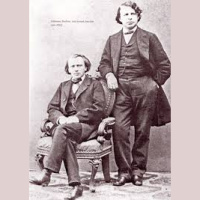
15/05/2025 Duração: 58minIt’s entirely possible that we would not know the name of Johannes Brahms very well if Brahms hadn’t met Joseph Joachim as a very young man. Joachim, who was one of the greatest violinists of all time, had already established himself as touring soloist and recitalist, and he happened to know the musical power couple of Robert and Clara Schumann quite well. Joachim encouraged Brahms to go to Dusseldorf to meet the Schumann’s, and the rest is history. I’ve talked about the Brahms-Schumann relationship dozens of times on the show before, but to keep it very brief, Robert Schumann’s rhapsodic article Neue Bahnen(new paths) launched Brahms’ career, and until Schumann’s deterioration from mental illness he acted as a valued friend and mentor for Brahms. Clara Schumann, as a performer, was a powerful advocate for Brahms’ music as well as a devoted and loving friend throughout the rest of their lives. Almost constantly present in this relationship was the sound of Joseph Joachim’s violin. Brahms did not have a huge c
-
![Copland Clarinet Concerto]()
Copland Clarinet Concerto
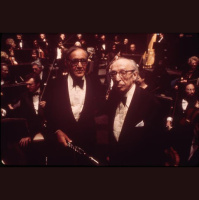
01/05/2025 Duração: 48minThe commission for a new Clarinet Concerto from the great American composer Aaron Copland came from a rather unlikely source: Benny Goodman, the man known as the King of Swing. Goodman was one of the most famous and important jazz musicians of all time, but in the late 1940s, swing music was on the decline, and bebop had taken over. Goodman experimented with bebop for a time but never fully took to it in the way that he had so mastered swing. Goodman then turned towards the classical repertoire, commissioning music from many of the great composers of the time, such as Bela Bartok, Darius Milhaud, Paul Hindemith, Francis Poulenc, and of course, Aaron Copland. Copland eagerly agreed to the commission, and spent the next year carefully crafting the concerto, which is full of influences from Jazz as well as from Latin American music, perhaps inspired by the four months Copland spent in Latin America while writing the piece. What resulted from all this was a short and compact piece in one continuous movement split
-
![Steve Reich: Different Trains]()
Steve Reich: Different Trains
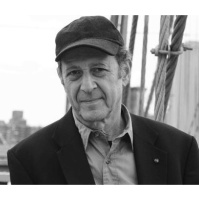
17/04/2025 Duração: 52minSteve Reich, the great American contemporary composer, provided this program note about his work Different Trains: “The idea for the piece came from my childhood. When I was one year old my parents separated. My singer, song-writer mother moved to Los Angeles and my attorney father stayed in New York. Since they arranged divided custody, I travelled back and forth by train frequently between New York and Los Angeles from 1939 to 1942 accompanied by my governess. While the trips were exciting and romantic at the time I now look back and think that, if I had been in Europe during this period, as a Jew I would have had to ride very different trains. With this in mind I wanted to make a piece that would accurately reflect the whole situation.” Reich went about this piece in a completely innovative way: he recorded voices and then created the musical material for the piece out of the voices themselves, something that had never been done before. Therefore, the text and music material were integrated in a groundbrea
-
![Best of Frenemies: Debussy and Ravel]()
Best of Frenemies: Debussy and Ravel
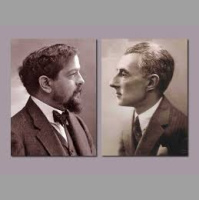
03/04/2025 Duração: 52minDebussy and Ravel are often described as the prototypical musical impressionists. It is often said that the two composers are the closest equivalents to the artistic world of Monet, Renoir, Pisarro, Degas, and others. But both Ravel and Debussy (like Monet for that matter), vehemently rejected the term Impressionism, and they both felt that they were striking out on their own individual paths in their msuic. That didn’t stop the public and critics from constantly comparing the music of these two shining lights of French music, despite the fact that Ravel and Debussy are actually quite different. Comparing Ravel and Debussy is a bit like comparing Haydn and Mozart. At first glance, there are many similarities, but if you look and listen more closely, Ravel and Debussy(like Mozart and Haydn) had totally different approaches, goals, and styles. All of the constant comparisons and attempts at making the composers compete with each other had a real impact on Debussy and Ravel. Initially they were friends and mutua
-
![Shostakovich Cello Concerto No. 1]()
Shostakovich Cello Concerto No. 1
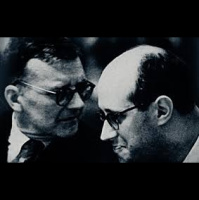
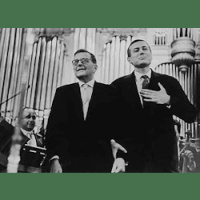
20/03/2025 Duração: 50minIt’s hard to overstate the depth of the connection between Dmitri Shostakovich and the legendary cellist Mstistlav Rostropovich. Shostakovich and Rostropovich were extremely close friends, and Shostakovich wrote and dedicated several works to him, including the piece we’re going to talk about today, the first Cello Concerto. Rostropovich had been desperate to get Shostakovich to write a concerto for him, but Shostakovich’s wife had one simple piece of advice: if you want Shostakovich to write something for you, don’t talk to him about it or even mention it. So Rostropovich waited and waited, until July of 1959, when he was asked by Shostakovich to come to Leningrad to try out a new Cello Concerto. Shostakovich played through the piece for Rostropovich, turned to him, and asked him if he liked it. Rostropovich apparently told Shostakovich that he “had been shaken to the core.” Shostakovich, in his famously modest way, then shakily asked Rostropovich if he could dedicate the concerto to him. Rostropovich immedi
-
![Ravel, Ravel, Ravel, w/Boris Giltburg and G. Henle Verlag!]()
Ravel, Ravel, Ravel, w/Boris Giltburg and G. Henle Verlag!
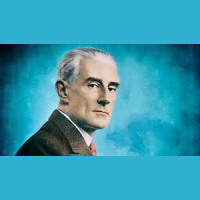
06/03/2025 Duração: 59minMagician, Swiss Watchmaker, Aloof, Elegant, Precise, Soulful, Childlike, Naive, Warm: these are all words that have been used to describe Maurice Ravel, a man of elegant contradictions. But perhaps these contradictions are why his music remains so beloved and universally appealing to so many musicians and audience members. Ravel has long been one of my favorite composers, and I always adore listening to his music and performing it. For the 150th anniversary of his birth, the legendary publishing house of G Henle has decided to focus on Ravel and his circle this year, calling this series Ravel and Friends. A few months ago, the Henle office contacted me to ask if I would be willing to collaborate with them on a series of Sticky Notes episodes about Ravel, each one focusing on the relationship between Ravel and another composer who was in his circle. This sounded like an amazing idea, and so I jumped at the chance to work with them. So, over the course of the next 5-6 months, you will be seeing 5 episodes under
-
![Amy Beach, Gaelic Symphony]()
Amy Beach, "Gaelic" Symphony
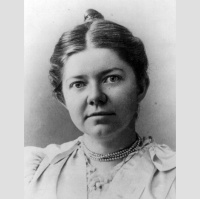
06/03/2025 Duração: 01h56sAmy Beach is a name that might not be familiar to you. She was born in 1867 and died in 1944, and her life was one of the most fascinating and varied in musical history. She was a child prodigy, became a successful pianist, and then pivoted to composing at her husband’s request. She was one of the first successful composers without any training from Europeans, and when her Gaelic Symphony was performed for the first time in 1896, it became the first symphony by an American woman to be published or performed. This symphony, and Beach’s whole career, is inextricably linked with the history and mores of the time, from the influence of Dvorak on American music, to Beach’s stop and start relationship to performing. The Gaelic symphony is a remarkable amalgamation of American symphonic brilliance, some European influence(especially from Dvorak), and the music of Beach’s own heritage. It’s a symphony that was very popular in its time and then was forgotten, but now is finding itself on the stage more and more often.
-
![Sticky Notes en Français! Shostakovich Symphonie No. 13 (Bonus Episode)]()
Sticky Notes en Français! Shostakovich Symphonie No. 13 (Bonus Episode)
27/02/2025 Duração: 01h10minVoici un épisode bonus spécial de Sticky Notes en français, en avant-première de mes concerts avec l'Orchestre National de Lille, présentant la 13e symphonie de Shostakovich. Si vous souhaitez écouter la version anglaise de cet épisode, elle est disponible dans les archives. Je m'excuse pour toute mauvaise prononciation en cours de route, et j'espère que vous l'apprécierez ! This is a special bonus episode of Sticky Notes in French ahead of my concerts with the Orchestre National de Lille, featuring Shostakovich's 13th symphony. If you would like to listen to the English version of this episode, it is available in the archives. Apologies for any mis-prononciations along the way, and I hope that you enjoy it!
-
![Smetana: Ma Vlast]()
Smetana: Ma Vlast
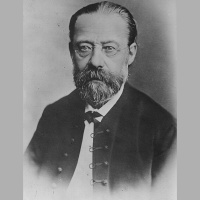
06/02/2025 Duração: 01h05minNationalism, patriotism, cultural identity, a sense of home; these are concepts and ideas whose popularity have ebbed and flowed throughout history. Nationalism has been seen as a natural expression of cultural identity and pride, and it also has been at the core of virulent racism and xenophobia. Patriotism has been used as a cudgel by all sides of the political spectrum for good and evil, and a sense of home has led to cultural explosions and also to some of the bloodiest wars of all time. For Bedrich Smetana, these concepts were extremely multi-layered. He was a proud Bohemian nationalist for much of his life, but he also barely spoke Czech(German was the lingua franca among educated classes in Prague), and he was also disenchanted with the Prague musical establishment due to their cool reception of his Wagnerian/Lisztian style. He even left Prague for a time to work in Gothenburg Sweden, writing curtly to his parents: “Prague did not wish to acknowledge me, so I left it.” But only 6 years later, he wrote
-
![Berg Violin Concerto]()
Berg Violin Concerto
23/01/2025 Duração: 48minIn the early 1930s, at the height of the atonal and twelve tone movement in music, the American violinist Louis Krasner commissioned a concerto from the Viennese Composer Alban Berg. Berg declined at first, saying that his idiom was not appropriate to a concerto and that he did not belong in the world of Wienawski and Vieuxtemps, two relatively obscure composers nowadays who wrote virtuoso showpieces for the violin that are very exciting but not particularly deep on a musical level. Krasner countered with the Beethoven and Brahms’ violin concertos, which, frankly, is a pretty great argument! Krasner was convinced that Berg was the vessel through which 12 tone/serial music could reach, as the great writer Michael Sternberg called it, “it’s expressive potential.” The 12 tone/serial technique of writing music was still controversial at the time(and it remains that way now), with many composers and performers embracing atonal music, with others, especially audiences, turning away. Berg finally accepted the commis
-
![Beethoven String Quartet, Op. 135]()
Beethoven String Quartet, Op. 135
09/01/2025 Duração: 57minThere is nothing like hearing a Late Beethoven String Quartet for the first time. Beethoven’s late string quartets, Op. 127, Op. 130, Op. 131, Op. 132, and Op. 135, are among the 5 greatest pieces of music ever written for any combination of instruments. They reach a kind of cosmic understanding of the world that is unparalleled, and they remain the Mount Everest of every string quartet’s repertoire. The quartet we’re going to be talking about today, Op. 135, is slightly the outlier from the set, in that it is less expansive, slightly less complex, and as Misha Amory from the Brentano String Quartet says, “it is the work of a composer who seems to have suddenly attained some new, simple truth after miles of struggle.” Op. 135 is Beethoven’s last completed work, and as this year begins, I thought I would check off number 2 of 5 Late Beethoven Quartets with this work that seems to exist on another plane of existence entirely. It is a piece of great depth and sadness, and also of ecstasy and lightness. It is a p
-
![Berlioz Symphonie Fantastique LIVE w/ The Aalborg Symphony]()
Berlioz Symphonie Fantastique LIVE w/ The Aalborg Symphony
27/12/2024 Duração: 01h12minI'm so happy to share this live episode of Sticky Notes that I did with the Aalborg Symphony Orchestra in Denmark back in October! This episode covered Berlioz's remarkable Symphonie Fantastique - the ultimate symphonic thrill ride. Join the orchestra and I as we talk our way through this symphony, from it's opium fueled back story, to its innovative structure and style, to the dreams and reveries of the first movement and the sadistic glee of the final two movements, and a whole lot more. Thank you to the Aalborg Symphony for their participation in this project, and I hope all of you listening have had a wonderful holidays and a Happy New Year! See you in the New Year with all new episodes from Beethoven's Opus 135 String Quartet to Smetana's Ma Vlast and much much more!
-
![Shostakovich Symphony No. 8]()
Shostakovich Symphony No. 8
12/12/2024 Duração: 01h08minHere are two statements by Dmitri Shostakovich about the same piece, the 8th symphony that we are talking about today: Statement No. 1, Shostakovich’s published comments about the symphony when it was first performed in 1943: The 8th Symphony reflects my…elevated creative mood, influenced by the joyful news of the Red Army's victories…. "The Eighth Symphony contains tragic and dramatic inner conflicts. But on the whole it is optimistic and life-asserting. The first movement is a long adagio, with a dramatically tense climax. The second movement is a march, with scherzo elements, and the third is a dynamic march. The fourth movement, in spite of its march form, is sad in mood. The fifth and final movement is bright and gay, like a pastoral, with dance elements and folk motifs. "The philosophical conception of my new work can be summed up in these words: life is beautiful. All that is dark and evil rots away, and beauty triumphs." Statement No. 2, from the disputed book Testimony, published in the 1970s: ‘And t
-
![Literary Works in Classical Music]()
Literary Works in Classical Music
27/11/2024 Duração: 46minMy Patreon sponsor for this episode, Adrian, set me a challenge: The influence of literary works on classical compositions, exploring pieces inspired by poetry, novels, or plays. He also asked me to do something else, and I’m going to quote him here: Also, if I may add something regarding the episode: It is of course possible to make an episode about the influence of literature on music by simply doing an overview of different works that have some obvious attachment to a work of literature. However, it would be particularly interesting if you could say something more general or principled (or philosophical, if you will) about the relation between literature and music. Why do so many composers write pieces about or inspired by literary works? Does music based on literary works have any distinguishing features compared to other music? Does literature add something to music beyond simply being a subject matter among many possible subject matters? To attempt an answer at Adrian’s last question, I think the answe
-
![Brahms Clarinet Quintet]()
Brahms Clarinet Quintet
14/11/2024 Duração: 51minThe muses were Ancient Greek goddesses of inspiration. Throughout history, the term muse has been used to describe any number of people, all of whom inspired works of great art and/or literature. In the popular imagination, muses are almost always women, inspiring brilliant men to their greatest artistic achievements. Why am I bringing this up? Because in the case of the piece we are going to talk about today, the Brahms Clarinet Quintet, the muse, and the source of inspiration, was very different. In 1890, Brahms retired from composing. In a way this was very rare. Composers very rarely retired, and most went on composing until their deaths, leaving unfinished works, but Brahms declared that he had nothing left to contribute, and that a younger generation should take over. He was only 57 years old, but he had become embittered both with the world of music and with the world as a whole. His 4th symphony had ended in a kind of apocalyptic destruction of the symphonic genre as a whole; a paroxysm of disillusion
-
![Politics in Classical Music]()
Politics in Classical Music
31/10/2024 Duração: 57minClassical music and politics have never been easy bedfellows. Composers and performers throughout history have relied on patronage and support from wealthy sources in order to keep their dreams afloat, and so unlike many other forms of music, classical music often has the reputation of being a politics-free zone. But the truth is that there is a whole repertoire of classical music that is infused with politics, and not just music from the 20th and 21st centuries. Today, with the American election looming just around the corner, we'll explore a series of pieces that all had political messages, the stories behind them, the motivations of the composers who wrote these pieces, and of course, the music itself. We'll be covering music by Haydn, Smyth, Shostakovich, Verdi, Adams, and much more today - join us!
-
![Bernstein: Symphonic Dances from Westside Story]()
Bernstein: Symphonic Dances from Westside Story
24/10/2024 Duração: 42minThe original production of Westside Story ran for 732 performances, spawned a movie that won 11 Academy Awards, and is still a go to on every list of the greatest Broadway Musicals ever written. The collaboration between Leonard Bernstein, Stephen Sondheim, and Jerome Robbins was a revolution on par with the collaborations of Stravinsky, Diaghilev, and Nijinsky on the Rite of Spring. No Broadway show had ever been so gritty, so tragic, and so raw. The first performances of Westside Story were done against the backdrop of a rise in gang violence in New York City. The socio-economic aspects of the show were evident to everyone who watched it, and I always like to remind people that the location where Bernstein, Arthur Laurents, who adapted Shakespeare’s Romeo and Juliet for this show, and Sondheim imagined the story taking place is where Lincoln Center now sits, a seat of opulence and extravagance. Simply put, this was a musical, a comedy, a tragedy, a political statement, and most importantly, a stunningly