Mark Leonard's World In 30 Minutes
- Autor: Vários
- Narrador: Vários
- Editora: Podcast
- Duração: 327:42:30
- Mais informações
Informações:


Sinopse
Foreign policy podcasts hosted by Mark Leonard, Director of the European Council on Foreign Relations (ECFR), the first pan-European think-tank.
Episódios
-
![The role of the Persian Gulf in the war in Gaza]()
The role of the Persian Gulf in the war in Gaza
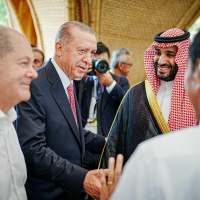
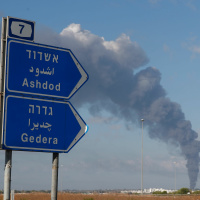
15/12/2023 Duração: 32minSecond only to the United States, the Gulf countries have emerged as key players in the Israel-Hamas war. Qatar has been a crucial go-between in negotiating the recent hostage return and seven-day ceasefire, but has also come under fire for its chummy relationship with Hamas. The United Arab Emirates, for its part, has maintained a studious neutrality and appears more keen on preserving economic ties with Israel than getting pulled into the conflict. And as the region’s biggest player, Saudi Arabia could still play a decisive role in bringing Israelis and Palestinians to the negotiating table after the war ends (at least the Biden administration hopes so). What is at stake for the Gulf? And is there a constructive role for the region’s countries to play as Israel continues its fight against Hamas amid mounting international criticism?In this week’s episode, Jeremy Shapiro welcomes ECFR visiting fellow, Cinzia Bianco, and senior policy fellow, Hugh Lovatt to discuss the role of the Persian Gulf in the ongoing
-
![Digital empires: The global battle to regulate technology]()
Digital empires: The global battle to regulate technology
08/12/2023 Duração: 32min“Digital empires” – the geopolitical entities that wield their influence and control in the digital landscape – shape much of how we interact with the online world. Currently, the United States, China, and the European Union are taking the lead, with their substantial investments in technology, innovation, and digital infrastructure, and their efforts to shape and regulate the digital economy. In this week’s episode, Jeremy Shapiro welcomes Anu Bradford, author and Henry L. Moses professor of law and international organization at Columbia University, to discuss her new book “Digital Empires: The Global Battle to Regulate Technology”. In it, she argues that the global regulatory battle between the US, China, and the EU is intensifying, as they try to rein in powerful tech companies while attempting to expand their influence in the digital world. What role do the companies being regulated have to play? Do they have any agency in this great regulatory game? What about the rest of the world’s digital influence?
-
![Views from Moscow]()
Views from Moscow
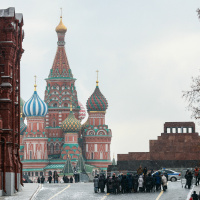
01/12/2023 Duração: 35minThe West perceives Russians as either indifferent or supportive of the war being waged on their doorstep. But a sharp decrease in on-the-ground reporting since February 2022 means that the country has become poorly understood.In this week’s episode, Jeremy Shapiro welcomes senior policy fellow Kadri Liik and Valerie Hopkins, an international correspondent for The New York Times covering the war in Ukraine as well as Russia and the countries of the former Soviet Union. Together, they discuss how Russian society really sees the war in Ukraine. How long will Putin be able to sustain the war effort while keeping public dissent to a minimum? And three months after disposing of Prigozhin, how solid is Putin’s grip on power?Bookshelf:War and Punishment | Mikhail Zygar In Different Years | Anatoly Adamishin Hosted on Acast. See acast.com/privacy for more information.
-
![What the war in Gaza means for Turkey]()
What the war in Gaza means for Turkey
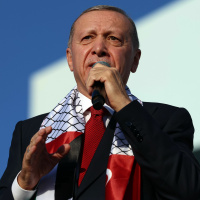
24/11/2023 Duração: 31minSince the war in Gaza, Turkey’s president Recep Tayyip Erdoğan has raised eyebrows among his Western allies for his strident criticism of Israel and refusal to condemn Hamas. Likewise, the atmosphere in Turkey has been heated, with attempts to storm an airbase hosting US troops as well as the Israeli consulate in Istanbul.In this week’s episode, Jeremy Shapiro welcomes senior policy fellow Aslı Aydıntaşbaş, a visiting fellow at the Brookings Institute, and Dimitar Bechev, a nonresident senior fellow at the Atlantic Council and the director of the European Policy Institute in Sofia. Together, they look beyond the heated rhetoric and street politics and discuss what the war means for Turkey’s foreign policy. Where do Israel-Turkey relations stand now? Could Turkey play a role similar to Qatar’s? How are US officials reacting to Turkey’s response?This podcast was recorded on 21 November 2023. Bookshelf: Odessa: Genius and Death in a City of Dreams | Charles KingAmerican Prometheus: The Triumph and Tragedy of J.
-
![Living in an à la carte world: What European policymakers should learn from global public opinion]()
Living in an à la carte world: What European policymakers should learn from global public opinion
17/11/2023 Duração: 34minECFR’s new global opinion poll reveals that many people outside the West want Europe and the US in their lives for all they have to offer – but that does not translate into full political alignment. In this week’s episode, ECFR’s research director Jeremy Shapiro welcomes council member Timothy Garton Ash, who is a bestselling author and professor of European studies at Oxford University; Ivan Krastev, who is a founding board member of ECFR and chairman of the Centre for Liberal Strategies in Sofia; and ECFR’s director Mark Leonard to discuss how public sentiment can guide Europe in building partnerships for the world of tomorrow. What is the basis for the West’s soft power? What sort of offer is China making the world? And whom do countries in the ‘global south’ prefer when faced with a choice between the West and China?This podcast was recorded on 7 November 2023.Bookshelf:Places of Mind: A Life of Edward Said | Timothy BrennanEnvironmental Political Theory | Steve VanderheidenLes Aveuglés, comment Berlin et
-
![The consequences of the war in Gaza for Ukraine]()
The consequences of the war in Gaza for Ukraine
10/11/2023 Duração: 33minFor Kyiv, the war in Gaza couldn’t have come at a worse time. It has taken the global spotlight just as the fighting between Russian and Ukrainian forces has reached a stalemate (as top Ukrainian general Valery Zaluzhny wrote in The Economist last week) and division in the US Congress threatens to sever its military aid lifeline.In this week’s episode, Jeremy Shapiro, ECFR’s research director, seizing control from Mark Leonard over the next few weeks, welcomes Gustav Gressel, senior policy fellow with the Wider Europe Programme focusing on Russia, and Kirill Shamiev, visiting fellow and expert in Russia’s civil-military relations, domestic politics, and policymaking.Together, they discuss the consequences of the war in Gaza for the war effort in Ukraine. How has the Ukrainian government responded to this new crisis? What consequences will it have for the Ukraine war? And what can Europe do to manage an ever-growing list of crises in its neighbourhood?This podcast was recorded on 6 November 2023. Hosted on Aca
-
![What Europe can expect from the next US president]()
What Europe can expect from the next US president
03/11/2023 Duração: 32minOn 5 November 2024, America will elect its next president. As of now, the race for the White House is shaping up to be a replay of the 2020 presidential election – with Joe Biden and Donald Trump standing out as the likely candidates for their opposing parties. This time around, however, the United States’ engagement in the Middle East and in Ukraine, coupled with its global competition with China, could play a significant role in defining the outcome of the election. In this week’s episode, Mark Leonard welcomes ECFR’s research director Jeremy Shapiro, who is also the director of ECFR’s brand new US programme, and senior policy fellow Majda Ruge, who has worked extensively on US politics. Together, they discuss what America’s foreign policy could look like after the 2024 election and how Europe could engage proactively with the next US president. What should we expect from a second Biden presidency? Or from a second Trump presidency? What should Europeans do to plan ahead? And how can ECFR’s new US programm
-
![The blindsided: How France and Germany cleared the way for Russia]()
The blindsided: How France and Germany cleared the way for Russia
27/10/2023 Duração: 34minOn 24 February 2022, Russia blindsided most of Europe with its all-out invasion of Ukraine. This forced an overdue reckoning for Europeans on the failures of their Russia policy and the realities of Vladimir Putin’s agenda. In particular, France and Germany had been hoodwinked by promises of cheap Russian energy supplies, as well as the pipe dream of a common European security architecture with Moscow. In this week’s episode, Mark Leonard welcomes ECFR board and council member, Sylvie Kauffmann, who is editorial director, lead writer, and columnist at Le Monde; and ECFR council member, Timothy Garton Ash, who is a bestselling author and professor of European studies at Oxford University, to discuss Kauffmann’s new book “Les Aveuglés, comment Berlin et Paris ont laissé la voie libre à la Russie” (“The Blindsided: How Berlin and Paris Cleared the Way for Russia”). How and when could France and Germany have acted differently and changed the path of history? At what point was it clear that Putin was heading down
-
![How the Polish elections will change Europe]()
How the Polish elections will change Europe
20/10/2023 Duração: 34minPoland is returning to European politics as a constructive player. The country’s National Electoral Commission confirmed on Tuesday morning that the Polish opposition has gathered enough votes to form a government and end the Law and Justice party’s eight-year rule of illiberalism and Eurosceptism. The results also hold two key lessons for Europe: a country’s illiberal turn can be reversed, and polarisation is an insufficient tool to mobilise progressive voters.In this week’s episode, Mark Leonard welcomes senior policy fellows Piotr Buras, head of ECFR Warsaw, and Jana Puglierin, head of ECFR Berlin, to understand what we can expect from Poland’s new government and what Poland’s return to the EU’s centrist fold means for its neighbours and for Brussels. What options do Law and Justice have in opposition? What immediate consequences will the election results have for how Poland relates to the EU, to Germany, and to Ukraine? What effect will they have on the enlargement debate and on European elections next ye
-
![Podcast special: Hamas’s surprise attack on Israel]()
Podcast special: Hamas’s surprise attack on Israel
10/10/2023 Duração: 42minOn Saturday morning, Hamas carried out an unprecedented attack on Israel, firing thousands of rockets, but also infiltrating cities, towns, and kibbutzim in the south of the country. It is the first time a hostile power has taken Israeli territory since the Yom Kippur war in 1973. This surprise offensive – which has already killed more than 800 Israelis and left over 400 Palestinians dead in Gaza after initial Israeli military reprisals – marks a significant turning point in the Israeli-Palestinian conflict.In this special episode, Mark Leonard welcomes Israeli diplomat and strategist, Eran Etzion, who is a former head of policy planning at Israel’s Ministry of Foreign Affairs and former deputy head of the country’s National Security Council. They are joined by Julien Barnes-Dacey, director of ECFR’s Middle East and North Africa programme, and ECFR senior policy fellow Hugh Lovatt to discuss what is behind Israel’s intelligence failure and consider possible future scenarios. How did Hamas militants manage to
-
![Spain and Poland at the ballot box: what’s next for Europe?]()
Spain and Poland at the ballot box: what’s next for Europe?
06/10/2023 Duração: 29minLast week, Alberto Núñez Feijóo, leader of Spain’s People’s Party, lost his second bid at leading the country’s government. All eyes are now on Pedro Sánchez, acting prime minister and leader of the Spanish Socialist Workers’ Party, as he tries to gather enough support to hold his office for another term.Across the continent, Poland is preparing for the next parliamentary election on 15 October – and the rising far-right party Confederation is set to swing the balance between right-wing incumbents Law and Justice, and the liberal opposition.In this week’s episode, Mark Leonard welcomes senior policy fellows José Ignacio Torreblanca, head of ECFR Madrid, and Piotr Buras, head of ECFR Warsaw, to discuss how Spanish and Polish politics will affect Europe’s political map, the bloc’s support for Ukraine, the growing debate on enlargement, and next summer’s European elections. Are mainstream parties in Poland willing to form a government with Confederation?Whose support will Pedro Sánchez need to form a new governm
-
![Understanding the multipolar Middle East with Ellie Geranmayeh and Alistair Burt]()
Understanding the multipolar Middle East with Ellie Geranmayeh and Alistair Burt
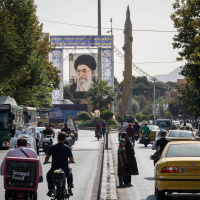
29/09/2023 Duração: 35minFor the past few months, the United States has been trying to broker a groundbreaking bilateral deal between Saudi Arabia and Israel. Iran, meanwhile, is forging an ever closer and ever more dangerous partnership with Russia. Finally, Saudi Arabia, the United Arab Emirates, and Egypt were invited to join the BRICS this summer – and are turning more and more towards the east. In short, the Middle Eastern order has shifted towards multipolarity. In this week’s episode, Mark Leonard welcomes Ellie Geranmayeh, senior policy fellow and deputy director of ECFR’s Middle East and North Africa programme, and Alistair Burt, pro-chancellor of Lancaster University and former UK minister of state for the Middle East and North Africa. Together, they discuss the power dynamics that are shaping the Middle East’s embrace of multipolarity. Who are the winners and losers in these power shifts? How are China and Russia exploiting them? And what can Europe do to pursue its own interests in a region that has become much more comf
-
![The End of Germanys China Illusion]()
The End of Germany's China Illusion
22/09/2023 Duração: 33minIn her state of the union address, European Commission president, Ursula von der Leyen, announced an anti-subsidy investigation into Chinese electric cars. This summer, the German government released its first comprehensive China strategy, noting that “China has changed, and therefore we must change our approach.” These events mark a turning point in EU-China relations.In this week’s episode, Mark Leonard welcomes Janka Oertel, director of ECFR’s Asia programme, to discuss her new book “End of the China illusion: How we must deal with Beijing’s claim to power”, published by Piper Verlag (in German). What threats do today’s China pose to Europe and to Germany? What are the West’s biggest misconceptions about China? And what, really, does China want?This podcast was recorded on 20 September 2023.Bookshelf:Ende der China-Illusion: Wie wir mit Pekings Machtanspruch umgehen müssen | Janka OertelFive Times Faster: Rethinking the Science, Economics, and Diplomacy of Climate Change | Simon SharpeLenin: The Man, the D
-
![Defending the open society with Mark Malloch-Brown]()
Defending the open society with Mark Malloch-Brown
15/09/2023 Duração: 39minGlobal freedom has been declining for 17 years. Authoritarian turns are increasing, and current events – such as the rise of populism and Russia’s war on Ukraine – are shaping the future of democracy across the globe. In this week’s episode, Mark Leonard welcomes the president of the Open Society Foundations (OSF), Mark Malloch-Brown – who previously served as UN deputy secretary-general under Kofi Annan – to discuss open societies and OSF’s role in promoting justice, democratic governance, and human rights worldwide. What are OSF’s next steps in the new global reality? How could changes in the organisation’s presence in Europe affect civil society on the continent, especially in places like Poland, Hungary, and Ukraine? And how crucial is 2024, a year of big elections in Europe and the United States, for defending the open society model?This podcast was recorded on 13 September 2023. Bookshelf:Open Society BarometerThe Wide World | Pierre Lemaitre Hosted on Acast. See acast.com/privacy for more information
-
![The great reset? How the EU and the UK can rethink their security and defense cooperation]()
The great reset? How the EU and the UK can rethink their security and defense cooperation
08/09/2023 Duração: 31minWar has returned to the European continent, putting many previous divisions into perspective. This has caused European leaders to think afresh about their politics – and raised the question of the United Kingdom’s role in European foreign policy. Seven years after the Brexit referendum, the EU and the UK have finally resolved some of their differences through the Windsor Framework. The possibility of a reset between the UK and the EU on foreign policy could be on the horizon. In this year’s mini-series, Mark Leonard and Susi Dennison examine what a reimagined EU-UK relationship might look like. In this seventh episode, Mark and Susi welcome ECFR senior policy fellow, Nick Witney, who previously served as the first chief executive of the European Defence Agency, and ECFR distinguished policy fellow, Camille Grand, who is a former NATO assistant secretary general. How have Brexit and then the war in Ukraine affected UK-EU defence cooperation? What potential is there for future collaboration in defence, especia
-
![The Great Reset? Challenges and opportunities for EU-UK cooperation]()
The Great Reset? Challenges and opportunities for EU-UK cooperation
01/09/2023 Duração: 31minWar has returned to the European continent, putting many previous divisions into perspective. This has caused European leaders to think afresh about their politics – and raised the question of the United Kingdom’s role in European foreign policy. Seven years after the Brexit referendum, the EU and the UK have finally resolved some of their differences through the Windsor Framework. The possibility of a reset between the UK and the EU on foreign policy could be on the horizon. In this year’s mini-series, Mark Leonard and Susi Dennison examine what a reimagined EU-UK relationship might look like. In this sixth episode, Mark and Susi welcome former permanent secretary in the UK’s Department for Exiting the European Union, Philip Rycroft, who prior to that held several roles in Westminster and Brussels, including in Leon Brittan’s cabinet. How is post-Brexit Britan approaching trade deals and regulatory alignment with third countries? How has Brexit affected the movement of people and labour across borders? What
-
![Podcast special: Yevgeny Prigozhin’s death]()
Podcast special: Yevgeny Prigozhin’s death
25/08/2023 Duração: 30minOn 23 August, Wagner leader Yevgeny Prigozhin’s private jet crashed, leading Russian state media to declare his death. The enigmatic circumstances surrounding the event raise crucial questions about the incident itself, but also about its potential ramifications, which could extend well beyond Russia. In this special episode, Mark Leonard welcomes the head of ECFR’s Africa programme, Theodore Murphy, senior policy fellow, Kadri Liik, and visiting fellows Pavel Slunkin and Kirill Shamiev to dissect the aftermath of the development.To what extent will the Wagner group be able to maintain its autonomy from the Kremlin following Prigozhin’s death? How might Prigozhin’s death affect the power dynamics within Russia’s security apparatus and intelligence agencies? And what could the implications be for the future of Wagner, both in Ukraine and in Africa? The podcast was recorded on Thursday 24 August 2023.Bookshelf:The Redline podcast – episode 95: The Death of the US Dollar?Russian archive about the Revolution and
-
![The great reset? How the EU and the UK can rethink their cooperation on foreign policy - Ivan Rogers]()
The great reset? How the EU and the UK can rethink their cooperation on foreign policy - Ivan Rogers
18/08/2023 Duração: 36minWar has returned to the European continent, putting many previous divisions into perspective. This has caused European leaders to think afresh about their politics – and raised the question of the United Kingdom’s role in European foreign policy. Seven years after the Brexit referendum, the EU and the UK have finally resolved some of their differences through the Windsor Framework. The possibility of a reset between the UK and the EU on foreign policy could be on the horizon. In this year’s mini-series, Mark Leonard and Susi Dennison examine what a reimagined EU-UK relationship might look like. In this fifth episode, Mark and Susi welcome Britain’s former permanent representative to the EU, Ivan Rogers, who also served as David Cameron’s advisor for Europe and as principal private secretary to Tony Blair. How could the evolving geopolitical landscape, particularly the US-China relationship, influence security dynamics in the EU and the UK? What challenges and opportunities might a new UK government face when
-
![The Great Reset? How the EU and the UK can rethink their cooperation on climate and energy]()
The Great Reset? How the EU and the UK can rethink their cooperation on climate and energy
11/08/2023 Duração: 27minWar has returned to the European continent, putting many previous divisions into perspective. This has caused European leaders to think afresh about their politics – and raised the question of the United Kingdom’s role in European foreign policy. Seven years after the Brexit referendum, the EU and the UK have finally resolved some of their differences through the Windsor Framework. The possibility of a reset between the UK and the EU on foreign policy could be on the horizon. In this year’s mini-series, Mark Leonard and Susi Dennison examine what a reimagined EU-UK relationship might look like. In this fourth episode, Mark and Susi welcome Nick Butler, energy policy adviser at the Cavendish Laboratory, University of Cambridge, and the Faraday Institution, and previously senior policy advisor to former prime minister Gordon Brown and co-founder of the Centre for European Reform think tank. How does the EU-UK relationship sit in the context of global energy challenges and climate change? What areas of common i
-
![The Great Reset? The view from Brussels]()
The Great Reset? The view from Brussels
04/08/2023 Duração: 38minWar has returned to the European continent, putting many previous divisions into perspective. This has caused European leaders to think afresh about their politics – and raised the question of the United Kingdom’s role in European foreign policy. Seven years after the Brexit referendum, the EU and the UK have finally resolved some of their differences through the Windsor Framework. The possibility of a reset between the UK and the EU on foreign policy could be on the horizon. In this year’s mini-series, Mark Leonard and Susi Dennison examine what a reimagined EU-UK relationship might look like. In this third episode, Mark and Susi welcome the Eurasia Group’s managing director for Europe, Mujtaba Rahman, who previously served at the UK Treasury and the European Commission’s directorate general for economic and financial affairs, to discuss what this renewal of relations might look like. How has Brexit affected the UK’s economy? How can the UK negotiate a new agreement with the EU that avoids political difficu